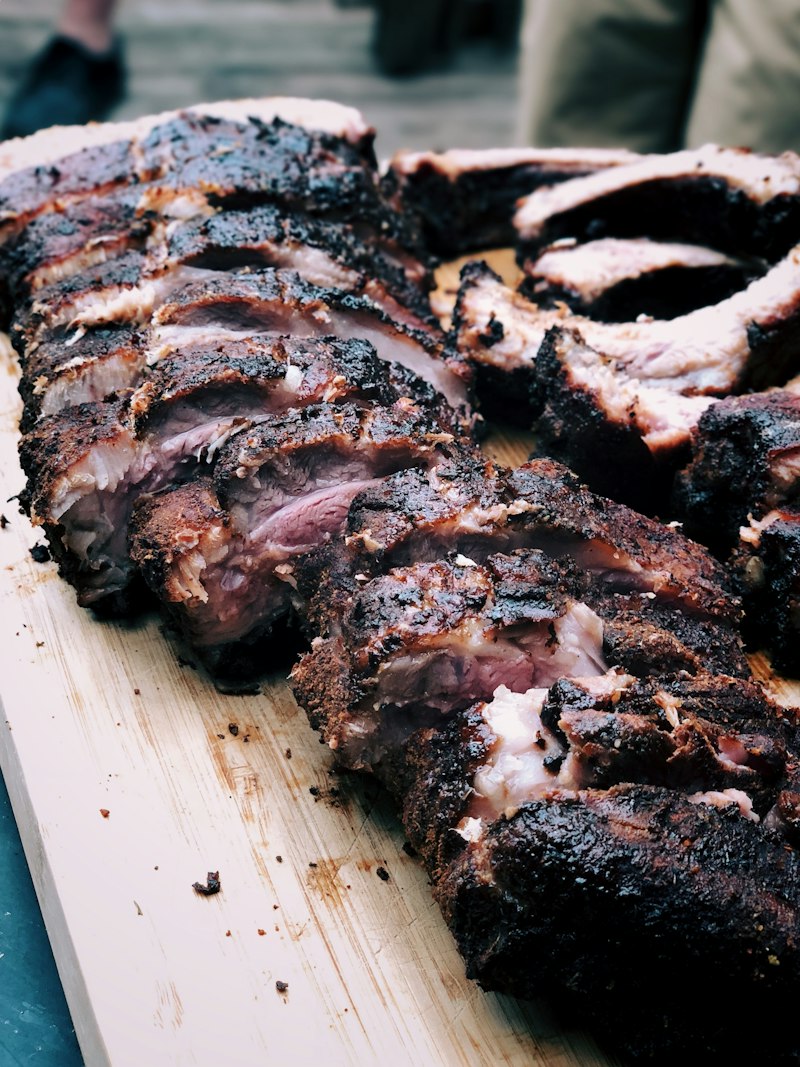
Brisket is the undisputed king of low-and-slow barbecue. A full packer brisket, weighing anywhere from 10 to 20 pounds, demands patience and precision. The cooking time depends on the weight of the cut, the temperature of your smoker, and whether you choose to wrap during the cook. Our calculator gives you a detailed estimate for whole packers, flat-only cuts, and point-only cuts, along with a visual timeline showing each phase of the cook from prep through the crucial resting period. Unlike many BBQ sites, we put the calculator first. No scrolling through product reviews to find the tool you came for. Enter your numbers and plan your cook in seconds. The estimates are based on industry data from USDA guidelines and Texas A&M Meat Science research, refined with input from competitive pitmasters.
How It Works
Start by selecting your brisket type. A whole packer includes both the flat and the point, connected by a fat cap. The flat is leaner and cooks faster at roughly 60 minutes per pound. The point is fattier and takes about 75 minutes per pound, similar to the whole packer. Enter the weight in pounds and choose your smoker temperature. The classic 225F gives the most smoke flavor and bark, while 275F cuts significant time with minimal quality loss. If you plan to wrap in butcher paper or foil during the cook, check the wrap option. Wrapping pushes through the stall faster, reducing total time by about 15%. The calculator outputs your estimated cook time, the expected stall window, rest duration, and a recommended start time based on when you want to serve.
When to Use This Calculator
Planning a weekend brisket for family dinner. Scheduling an overnight cook to serve at a Saturday afternoon cookout. Coordinating brisket alongside ribs and chicken using the Multi-Cut Planner. Estimating start time for a competition turn-in deadline. Comparing cook times at different temperatures to decide between low-and-slow and hot-and-fast approaches.
Frequently Asked Questions
What temperature is brisket done?
Brisket reaches food safety at 145F per USDA guidelines, but it is not tender until 195-205F. The real test is probe tenderness: insert a thermometer probe into the thickest part, and it should slide in with almost no resistance, like pushing into warm butter. Temperature alone is not enough because connective tissue breakdown varies between individual cuts.
Should I wrap my brisket?
Wrapping in butcher paper or aluminum foil, often called the Texas Crutch, helps push through the temperature stall and can reduce total cook time by about 15%. Butcher paper is preferred by many pitmasters because it allows some moisture to escape, preserving the bark. Foil creates a tighter seal that speeds cooking further but can soften the bark. Unwrapped briskets develop the crunchiest bark but take the longest.
How long does a 12 lb brisket take at 225F?
A 12-pound whole packer brisket at 225F typically takes 14-16 hours of active cooking time plus 1-2 hours of rest. If you wrap with butcher paper around the stall (usually at 165F internal), expect closer to 12-14 hours of cooking. Add 30 minutes for smoker warmup. For a 6 PM dinner, you would light your fire between 1 AM and 3 AM the same day.
What is the brisket stall?
The stall occurs when the internal temperature of the brisket plateaus around 150-170F, sometimes for 2-6 hours. This happens because moisture evaporating from the meat surface cools it at the same rate the smoker heats it. Larger, wetter briskets stall longer. You can wait it out, wrap the brisket, or increase smoker temperature. Our calculator accounts for typical stall behavior in its time estimates.
Fat side up or down?
The answer depends on your smoker design. On smokers where heat comes from below, such as the Weber Smokey Mountain or most offset smokers, placing the fat cap down protects the meat from direct heat. On kamado-style cookers or smokers with top-mounted heat deflectors, fat side up lets the rendering fat baste the meat. The difference is subtle, and both methods produce excellent brisket.