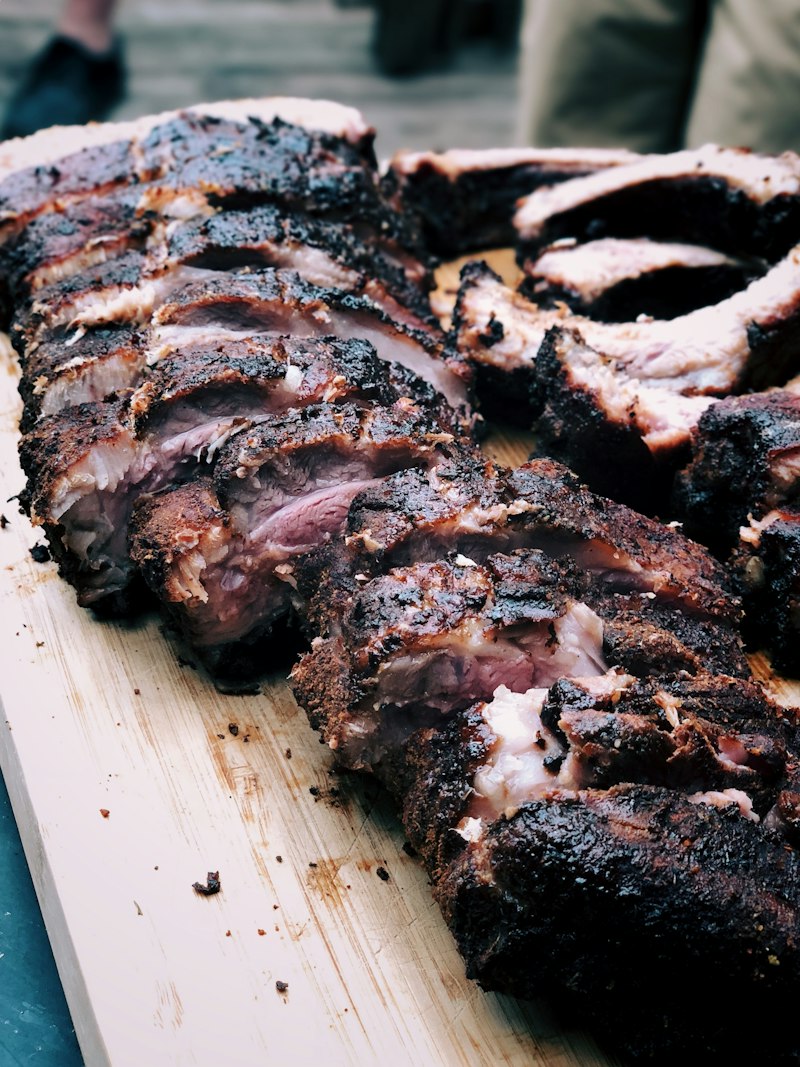
Resting smoked meat after cooking is not optional. It is the difference between a juicy, tender result and a dry, disappointing one. When meat is pulled from the smoker, the outer layers are significantly hotter than the center, and the muscle fibers are contracted from the heat. Resting allows the temperature to equalize throughout the cut and the muscle fibers to relax, reabsorbing juices that would otherwise pour out onto your cutting board.
Here is a quick reference for recommended rest times by cut:
Cut
Minimum Rest
Optimal Rest
Maximum Hold
Brisket
1 hour
1.5-2 hours
4 hours (faux cambro)
Pork Butt
30 min
45-60 min
4 hours (faux cambro)
Baby Back Ribs
10 min
15-20 min
1 hour
Spare Ribs
10 min
15-20 min
1 hour
Whole Chicken
15 min
20-25 min
45 min
Turkey
20 min
25-30 min
1 hour
Pork Belly
15 min
20 min
45 min
Beef Short Ribs
20 min
30 min
2 hours
The faux cambro method is the standard technique for holding large cuts like brisket and pork butt. Wrap the finished meat in butcher paper, then in towels, and place in a preheated insulated cooler. To preheat, fill the cooler with boiling water 30 minutes in advance, then dump the water before adding the meat. This method keeps meat safely above 140F for up to 4 hours.
How to Use This Guide
This page provides detailed reference information alongside our interactive calculators. For quick estimates, use the tables above. For precise calculations based on your specific setup, visit the linked calculators below. Bookmark this page for quick reference at the smoker during your next cook.
When to Reference This Page
This guide is most useful during the planning stage of your cook, when you are deciding on timing, quantities, or technique. Keep it bookmarked on your phone for quick access while tending your smoker. The information here is based on industry standards and real-world pitmaster experience.
Frequently Asked Questions
Why is resting meat important?
During cooking, heat drives moisture toward the center of the meat and causes muscle fibers to contract. If you slice immediately, that concentrated moisture floods out as juice on the cutting board. Resting allows the fibers to relax and reabsorb the liquid, distributing moisture evenly throughout the meat. A well-rested brisket retains significantly more juice in every slice.
Can you rest brisket too long?
Brisket can be held in a faux cambro (insulated cooler) for up to 4 hours safely. Beyond 4 hours, the internal temperature may drop below 140F, entering the food safety danger zone. If you need to hold longer than 4 hours, use a warming oven set to 150-170F. Some competition pitmasters hold brisket for 6-8 hours in commercial warmers with precise temperature control.
Should I wrap meat during resting?
Wrapping in butcher paper during rest helps retain heat and moisture. For brisket and pork butt, wrap tightly in paper, then in towels for the faux cambro. For ribs and chicken, a loose tent of foil is sufficient. Avoid wrapping in foil for extended periods, as trapped steam can soften the bark you worked hard to develop.
Does carryover cooking affect rest time?
Yes. The internal temperature of large cuts continues to rise 5-10F after removal from the smoker due to residual heat in the outer layers. This carryover cooking is most significant in brisket and pork butt. Account for it by pulling the meat a few degrees before your target temperature, especially if not wrapping for the rest.
Can I skip resting for ribs?
Ribs benefit less from resting than large cuts, but a 10-15 minute rest still improves juiciness. Because ribs have thin meat between bones, they cool quickly and do not experience as much carryover cooking. The main benefit of resting ribs is allowing the sauce glaze to set firmly. You can serve ribs after as little as 5 minutes of rest without a dramatic quality loss.